About
A small UK company that thinks passwords shouldn’t outlive the conversation they were sent in.
ShareShield is made by Antonym Cloud Ltd. We build one tool, and we try to build it the way we’d want a supplier of ours to: with plain claims, sensible defaults and no surprises in the small print.
Why ShareShield exists
It started as a rebellion
In early 2023 I needed to send passwords to people now and then, and the tools that did it gave you the basics for free and kept the rest behind a subscription. I didn’t mind paying. I minded paying for something that felt designed by engineers for engineers: forms upon forms of options, dropdowns and checkboxes.
So one evening I started writing my own, stayed up all night, and had the first version of ShareShield live by the morning. Three years and four versions later, the send form still looks like that first sketch: the secret is the point, and the options stay out of the way until you want them.
Along the way I learned more about how people work than about passwords. Chat feels more temporary than email and isn’t. Most people know the careful way and take the quick one because the careful one costs a minute they don’t have. ShareShield exists to take that minute away.
Rory Carter, who builds ShareShield
Three years, four versions
From one night in 2023 to 4.0
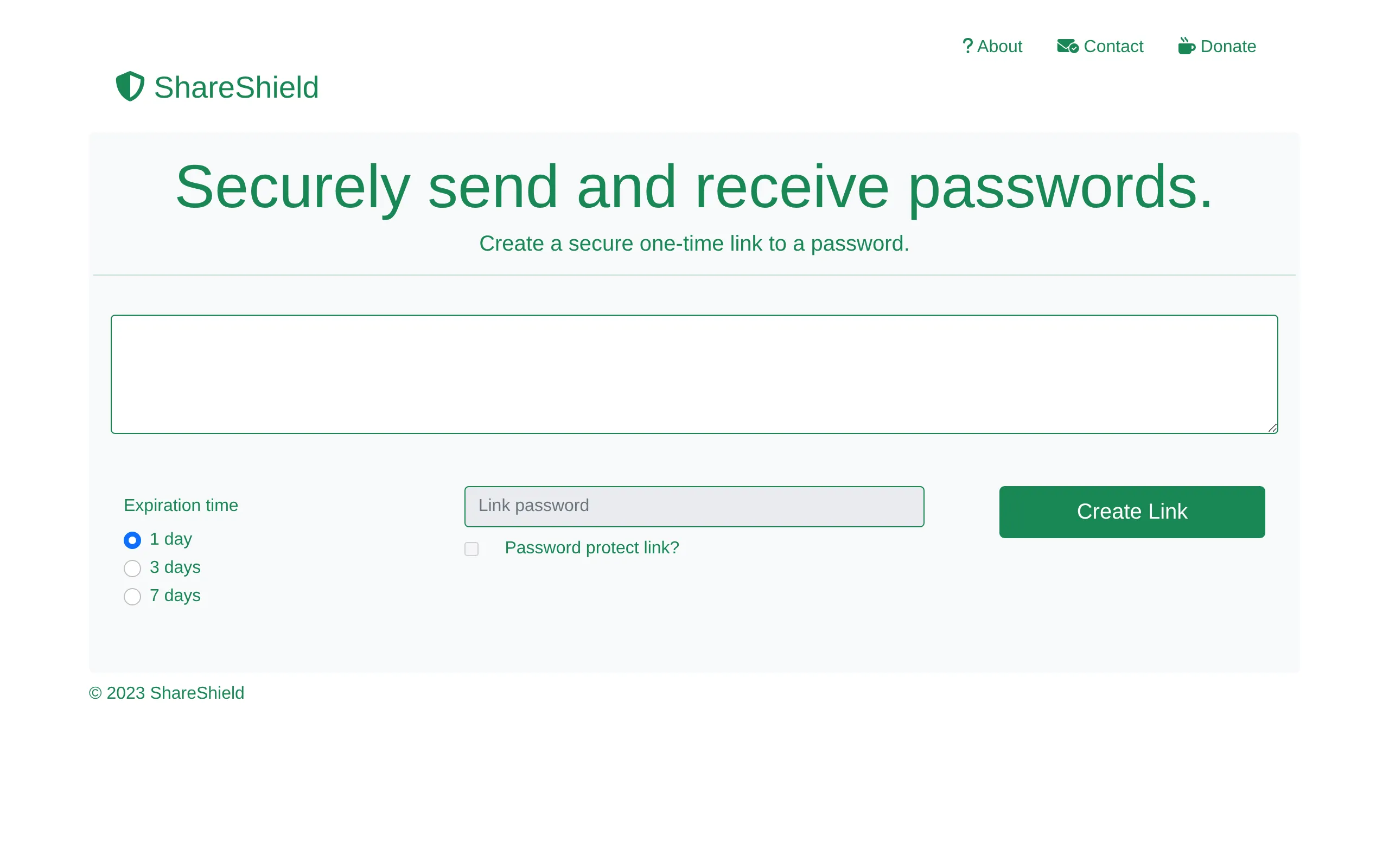
v1 Early 2023
One night
Written and deployed in a single night: a static page, a Cloudflare Worker for the encryption and Cloudflare KV for storage that forgets.
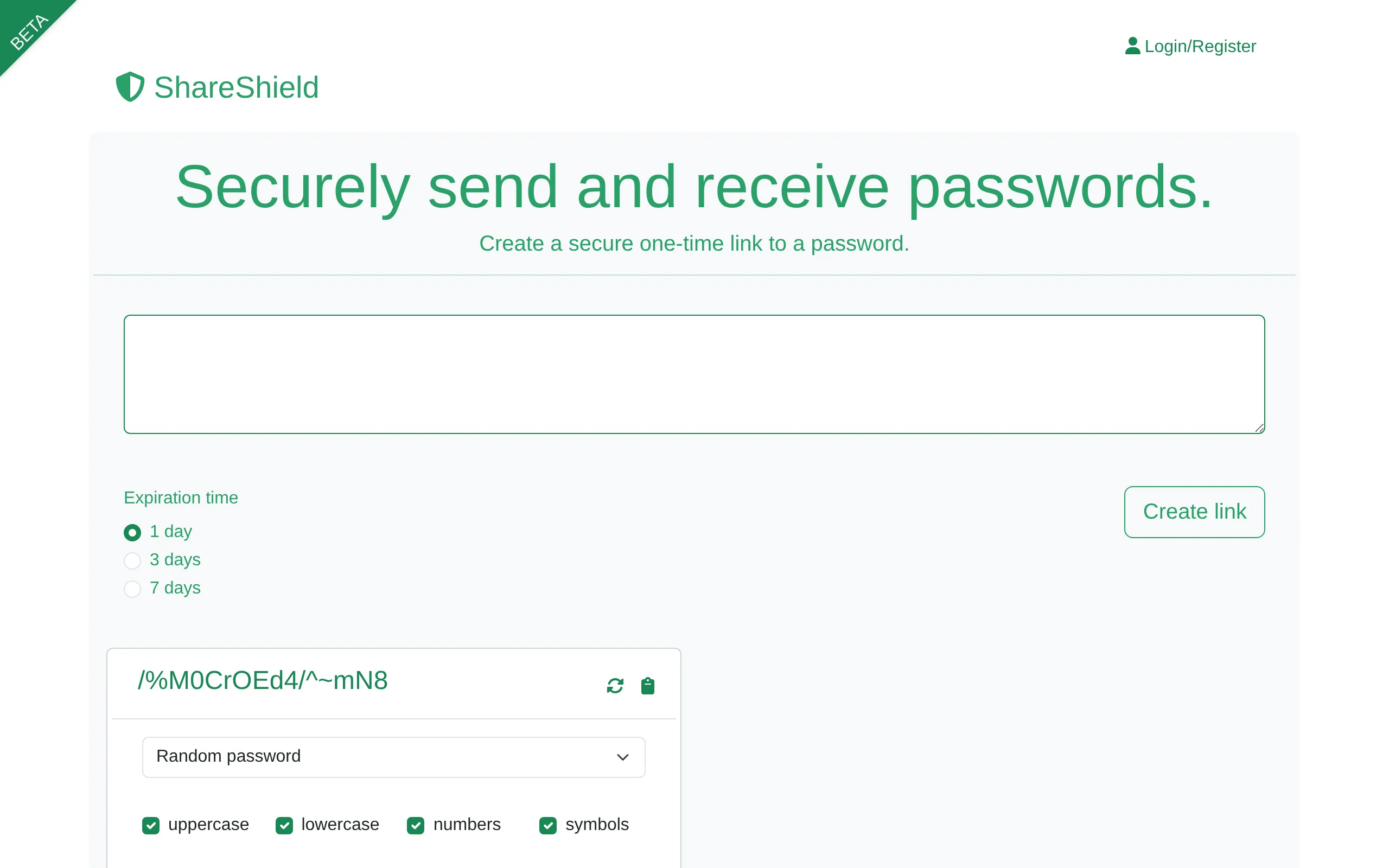
v2 Late 2023
Accounts
Rewritten in React with sign-in through Auth0, which opened the door to everything that needed to know who you were.
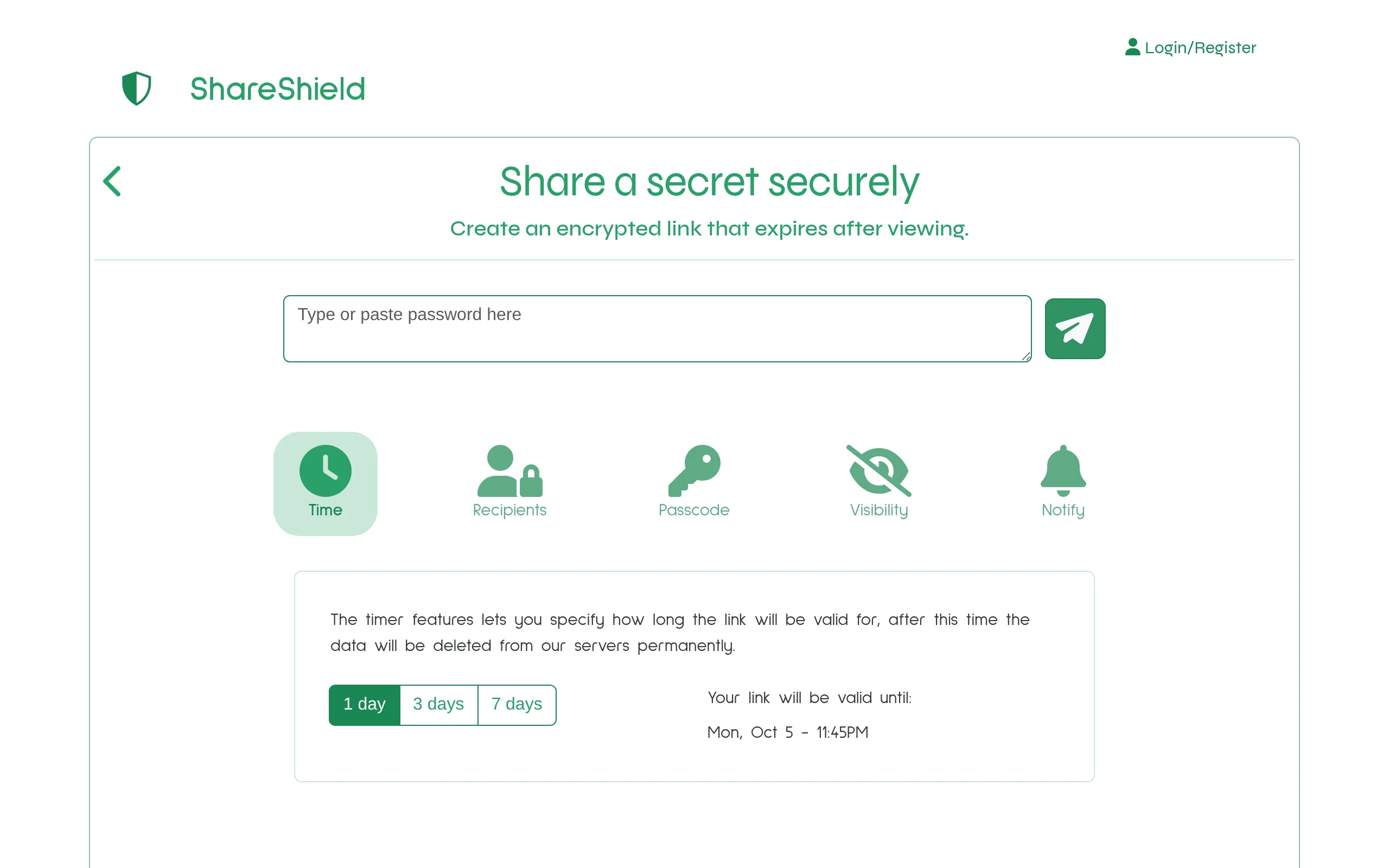
v3 2024 to 2025
Designed first
Sketched in Figma before a line of code: the options moved into a row of icons that open in place. The app moved to Next.js, and sign-in from Auth0 to Entra External ID, then Better Auth.
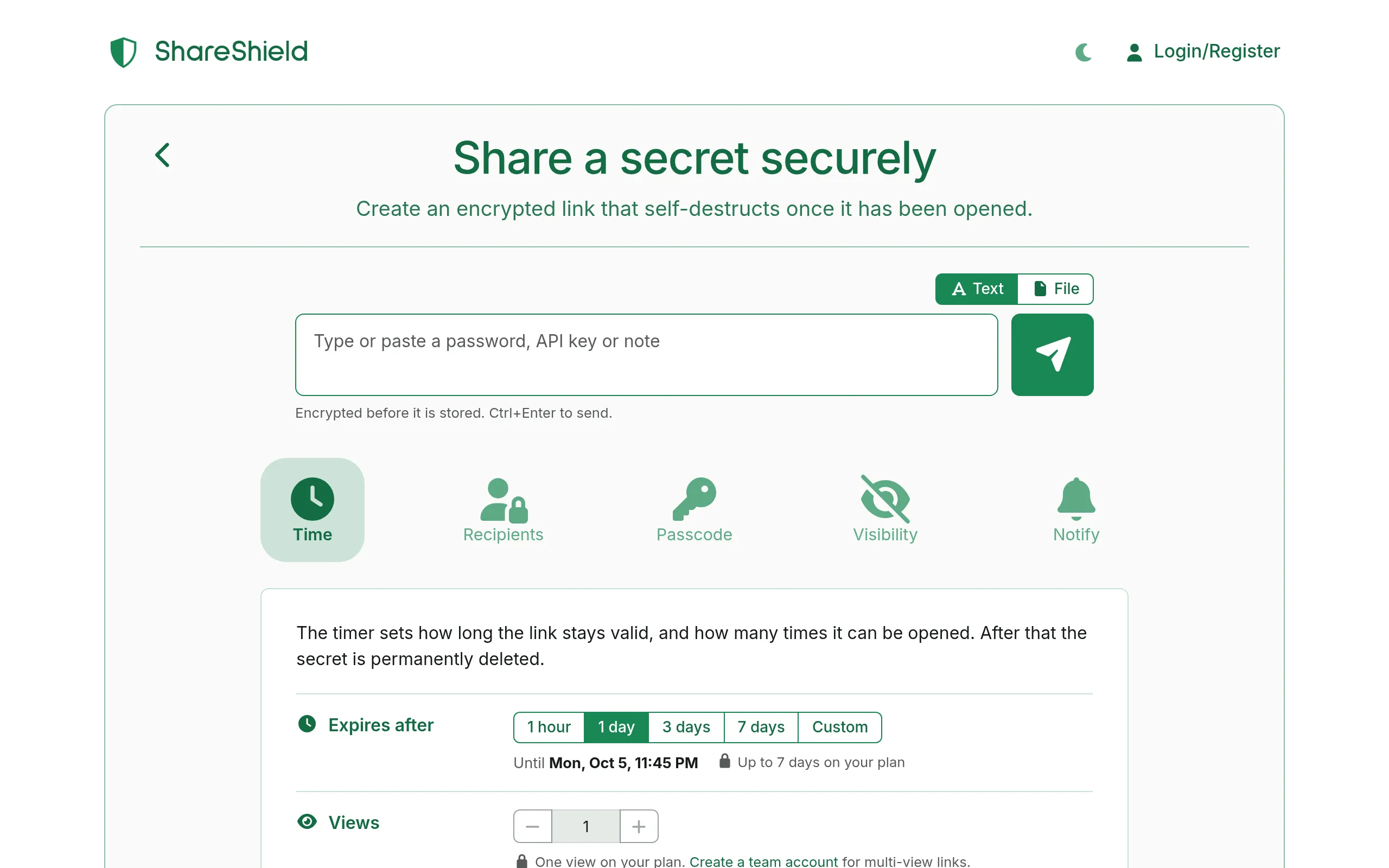
v4 October 2026
The one I set out to build
Organisations, enforced policies, an audit log, single sign-on, files and an API, behind the same quiet send form.
Next: ShareShield where people already work, starting with Teams, Outlook and Excel.
How we work
Five things we hold ourselves to
- 01
We describe our security as it is.
ShareShield encrypts every secret on our servers with its own key and deletes it once it’s been read. It is not end-to-end encrypted, and we say so on the first screen of our security page, along with the cases where you should use something else.
Read the security modelsecretAES-256-GCMciphertextdata keyrandom, one per secret└ wrapped bykey-encryption keyserver-held, rotatablebound tosecret idauthenticated dataEnvelope encryption, as on the security page. - 02
Deleted means deleted.
When a secret has been viewed, burned or has expired, we delete the encrypted contents, files included, rather than marking them hidden. We keep a record that it existed, and we tell you exactly what that record contains.
What we keep, and what we don’t - 03
This website doesn’t track you.
www.shareshield.net loads no third-party scripts or fonts and sets no analytics or advertising cookies. Its own cookies only remember whether you chose the light or dark theme. Cloudflare, which serves the site, adds a short-lived bot-protection cookie.
Read the cookie policy - 04
The basics aren’t an upsell.
Roles, two-factor authentication, the audit log and secret requests are on every plan, Free included. Paid plans add files and enforced policies, and from Professional, single sign-on. Beyond that, you pay for capacity: more secrets, people, views, expiry and file size.
Compare plans - 05
We don’t put words in customers’ mouths.
You won’t find customer logos, testimonials or star ratings on this site. When a customer agrees to tell their story in their own words, we’ll publish it; until then, the product has to speak for itself.
Who we are
The company behind it
ShareShield is made and operated by Antonym Cloud Ltd, a small company in the United Kingdom.
- Company
- Antonym Cloud Ltd
- Country
- United Kingdom
- [email protected]
Please never email us a password or other secret. If we need one from you, we’ll send you a ShareShield request link.
See for yourself
Send a secret to yourself, open it, then try the link again.